
Choosing the right fencing material involves more than appearance. Property owners, contractors, architects, and material buyers also need to consider maintenance, durability, installation, privacy, and long-term value. As alternatives to traditional wood and vinyl continue to grow, composite fencing has become an attractive option for many residential and commercial projects.
But is composite fencing worth it? The answer depends on the project. Composite fencing often costs more upfront than common wood options. However, its low maintenance needs and resistance to common types of damage can make it a worthwhile long-term investment.
This guide examines the pros and cons of composite fencing, compares it with other popular materials, and explains where it may work best.
What Is Composite Fencing?
Composite fencing is a broad term for fencing made from a combination of manufactured materials instead of a single natural material like wood. Depending on the product, manufacturers may use recycled or virgin plastics, wood fibers, polyethylene, resins, mineral components, or other material blends.
Not every composite fence uses the same construction. Manufacturers may extrude materials into boards and profiles or mold them into complete panels. These different methods can affect the fence’s weight, texture, strength, installation, and appearance.
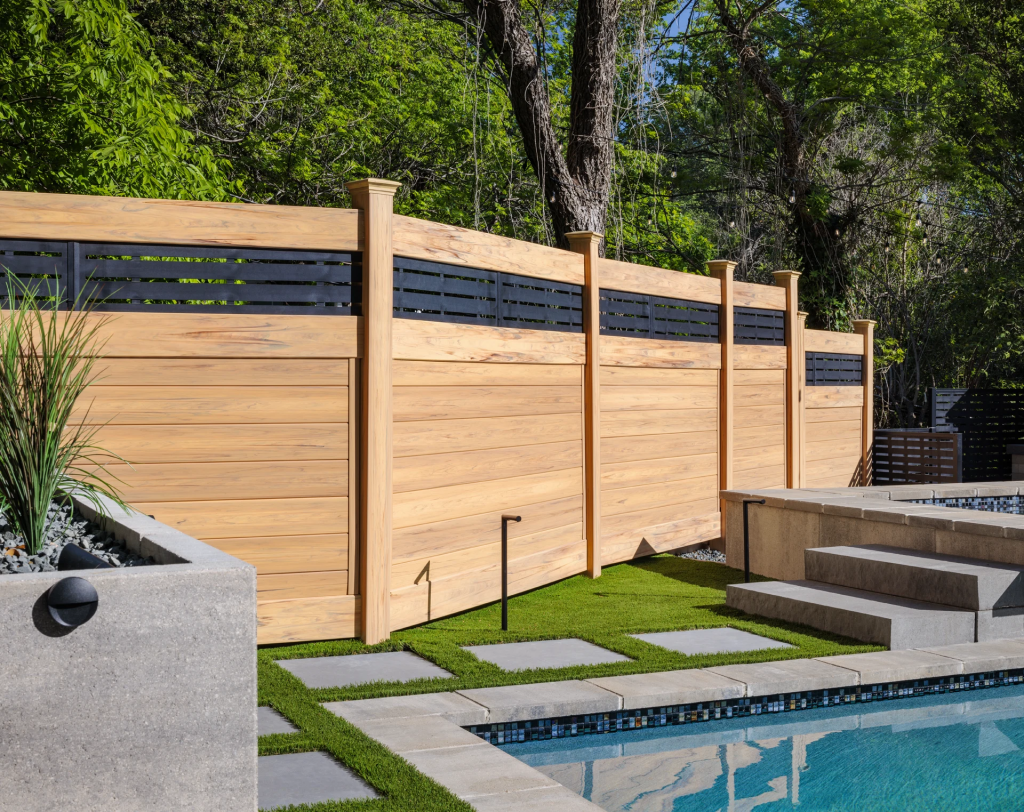
Composite fencing also comes in many styles. Options include smooth panels, wood-look boards, molded wood-grain panels, and designs that resemble stone or masonry. Many systems provide full privacy, while others offer decorative or semi-private designs.
Because products vary, buyers should review the specifications, warranty, installation instructions, and intended use of each system. Don’t assume every composite fencing product will perform the same way.
The Pros of Composite Fencing
1. Reduced Routine Maintenance
One of the biggest advantages of composite fencing is its relatively low maintenance. Traditional wood fencing may need periodic staining, sealing, or painting to maintain its appearance and protect it from moisture. Most composite systems don’t require these recurring treatments.
Instead, routine care usually involves occasional cleaning to remove dirt, pollen, mildew, and surface debris. Property owners should still follow the manufacturer’s cleaning recommendations because approved products and methods can vary.
Reduced maintenance can offer a major advantage for large properties. Commercial sites, multifamily developments, and other projects with long runs of fencing can especially benefit from lower maintenance demands.
2. Resistance to Rot and Insect Damage
Composite fencing doesn’t face decay and wood-damaging insects in the same way as untreated natural wood. As a result, it can work well in damp climates, shaded areas, and locations that regularly experience moisture.
However, composite fencing can still suffer damage. Proper installation, drainage, ground clearance, and compatible hardware remain important. Even so, reducing concerns about wood rot and insects can help limit certain maintenance and replacement needs.
3. Consistent Appearance
Natural wood contains knots, grain variations, color differences, and other characteristics that make every board unique. Many people appreciate that natural variation. However, some projects call for a more uniform appearance.
Manufacturers can give composite fencing a more consistent profile, texture, and color. This consistency can benefit planned communities, commercial properties, apartment complexes, and developments where a coordinated appearance matters.
Modern manufacturing methods can also create realistic wood-grain and stone-inspired textures. These options give buyers a natural-looking alternative without requiring traditional wood boards or masonry construction.
4. Strong Privacy Options
Many composite fence systems use solid or tightly fitted panels to provide substantial visual privacy. Depending on their construction, some solid panels can also help reduce unwanted sound. Buyers interested in noise reduction should review product-specific testing before choosing a system.
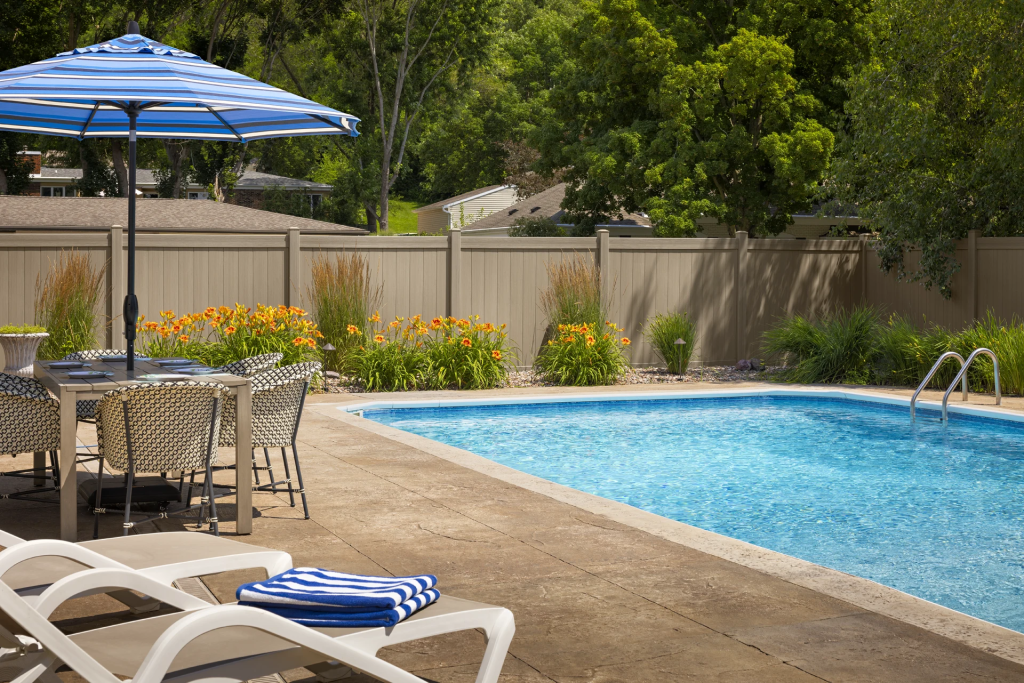
Composite privacy fencing can work well around backyards, swimming pools, patios, multifamily properties, mechanical equipment, refuse areas, and commercial boundaries.
Before installation, buyers should check local codes and any applicable pool-barrier requirements.
5. No Regular Painting or Staining
Manufacturers typically produce composite fencing with its finished color and texture already built into the material. Therefore, property owners don’t need to complete the initial finishing step or regularly repaint or restain the fence.
This benefit goes beyond convenience. Fewer finishing requirements can simplify project planning for contractors and reduce future work for property managers.
Color options vary by manufacturer, so buyers should confirm their selections early in the design and estimating process.
6. Potential Long-Term Value
Composite fencing typically requires a larger initial investment than many basic wood options. However, purchase price represents only one part of a fence’s total cost.
Buyers should also consider finishing materials, maintenance labor, repairs, expected service life, and replacement costs. These expenses can add up over the life of a fence.
For projects where low maintenance is a priority, composite fencing may provide enough long-term savings and convenience to help offset its higher upfront price.
The Cons of Composite Fencing
1. Higher Initial Cost
Upfront cost is one of the most common drawbacks of composite fencing. Depending on the style, height, reinforcement, and installation requirements, composite fencing may cost more than pressure-treated wood and certain vinyl systems.
This higher price can make composite fencing less attractive for projects focused primarily on keeping initial material costs low.
However, buyers should compare complete installed systems instead of panel prices alone. Posts, rails, caps, reinforcement, gates, hardware, freight, and labor can significantly affect the final cost.
2. Product Weight
Some composite panels weigh more than comparable wood or vinyl components. The extra weight can affect unloading, handling, post spacing, equipment requirements, and crew size.
Extra weight isn’t necessarily a disadvantage once the fence is installed. However, contractors need to account for it during project planning.
Installers should follow the manufacturer’s requirements for posts, footings, reinforcement, and wind exposure rather than using installation methods intended for another type of fence.
3. Limited Field Customization
Contractors can easily cut, modify, repair, and assemble wood fencing into custom configurations. Composite systems may offer less flexibility.
Some composite components allow field cutting, while molded panels and proprietary systems may have stricter limitations. For this reason, accurate measurements and careful planning are especially important.
Contractors should review sloped sites, unusual corners, grade changes, custom heights, and irregular openings before ordering materials.
4. Repairs May Require Matching Components
Damage to a composite fence may require a matching panel, board, post, or accessory from the original system. Manufacturers may also change colors and textures between product generations. In addition, an older fence may weather differently than a new replacement component.
Buyers should consider long-term product availability and manufacturer support, especially for large projects that may require future additions or repairs.
When practical, ordering a small number of spare components can help with future repairs.
5. Quality and Performance Vary
The term “composite fencing” covers a wide range of products. Material formulas, structural designs, warranties, fade resistance, wind ratings, and installation systems can vary significantly.
Therefore, buyers shouldn’t choose a fence based on the composite label alone.
Instead, review technical documentation, code information, warranty exclusions, maintenance instructions, and the manufacturer’s installation guide before making a decision.
Composite Fencing vs. Wood
Wood remains a popular fencing material because of its natural appearance, availability, and flexibility. Contractors can cut it into custom shapes, repair it with common tools, and stain or paint it to achieve a specific finish. Depending on the species and design, wood may also have a lower initial cost.
Composite fencing offers a different set of advantages. It generally requires less routine maintenance and doesn’t face rot or insect damage in the same way as conventional wood. Composite products can also provide a more consistent appearance.
The better choice depends on the project’s priorities. Wood may work better when natural variation, customization, or lower upfront cost matters most. Composite may make more sense when low maintenance, uniformity, and long-term convenience are the main priorities.
Composite Fencing vs. Vinyl
Composite and vinyl fencing are different product categories. Manufacturers typically make vinyl fencing from PVC, while composite products can contain several materials or molded polymers. Construction methods can also vary within each category.
Vinyl offers a clean appearance and low maintenance requirements. Composite fencing may provide deeper wood-grain patterns, heavier textures, stone-inspired designs, or more substantial panel construction.
Buyers should compare pricing, weight, color options, reinforcement, and installation requirements for each system.
Neither material is automatically better. The right choice depends on appearance, site conditions, budget, product specifications, and overall project requirements.
Common Applications for Composite Fencing
Residential Privacy
Solid composite panels can create privacy around backyards, patios, pools, and outdoor living spaces. Wood-look textures may complement traditional or contemporary homes, while stone-look panels can create the appearance of a more substantial boundary.
Multifamily and Planned Communities
Consistent appearance and reduced maintenance can make composite fencing appealing for apartment communities, townhome developments, and homeowners’ associations. Using one coordinated system can help establish a uniform look across multiple buildings or property lines.
Commercial Properties
Composite fencing can be used for property boundaries, service areas, mechanical equipment screening, refuse enclosures, and other locations where privacy and appearance are both important. Commercial buyers should confirm wind-load information and any project-specific engineering requirements.
Hospitality and Recreational Areas
Hotels, restaurants, pool areas, parks, and recreational facilities may benefit from a fence that provides privacy without requiring frequent repainting or staining. The available colors and textures can help the fence coordinate with surrounding architecture and landscaping.
Noise-Sensitive Locations
Some solid composite systems are designed and tested to help reduce sound transmission. These may be considered near roads, equipment, commercial operations, or shared property lines. Because performance depends on panel construction, fence height, installation, terrain, and other conditions, buyers should request tested acoustic data before choosing a product for noise reduction.
What to Consider Before Choosing Composite Fencing
Before specifying or purchasing a composite fence system, ask the following questions:
- What materials and manufacturing method are used?
- Is the product intended for residential, commercial, or both types of applications?
- Are wind ratings or engineering documents available?
- What posts, footings, reinforcement, and hardware are required?
- Can the system accommodate slopes and grade changes?
- Are matching gates, caps, and accessories available?
- What cleaning and maintenance does the manufacturer recommend?
- What does the warranty cover, and what is excluded?
- Can replacement components be obtained in the future?
- Does the fence need to comply with local zoning, pool, or community requirements?
These questions help buyers compare complete systems and avoid choosing a product based only on color or panel style.
So, Is Composite Fencing Worth It?
Composite fencing can be worth the investment for projects that prioritize low maintenance, privacy, consistent appearance, and resistance to common wood-related deterioration. Its higher initial cost may be easier to justify when long-term upkeep, labor, and replacement considerations are included in the decision.
However, composite fencing is not the right answer for every project. Wood may offer greater customization and a lower entry price, while vinyl may provide a different balance of appearance, weight, and cost. The best selection comes from comparing the complete installed systems and reviewing the technical requirements of each product.
Capital Forest Products supplies fencing materials for dealers, architects, and wholesale purchasers. Contact our team to discuss material options, project requirements, availability, and truckload or mill-direct purchasing opportunities.