
The Hidden Layer That Protects Everything Above It
When most builders think about roofing, their minds go straight to shingles, metal panels, or siding. But beneath those visible materials lies a critical layer that often determines how long a structure will last: the roof underlayment. For sheds and barns in particular, choosing the right underlayment can make the difference between years of reliable protection or recurring headaches with leaks, condensation, and premature repairs.

From Felt Paper to Synthetic: A Shift in the Industry
For decades, traditional felt paper was the go-to option. It was inexpensive and easy to find, but builders quickly learned its shortcomings:
-
Tears easily during installation
-
Degrades under UV exposure
-
Limited resistance to moisture over time
Synthetic underlayments entered the market as a direct response to those problems. Builders of sheds, barns, pole buildings, and metal-roofed structures are now embracing synthetics because they offer far superior performance, efficiency, and protection.
Benefits of Synthetic Underlayment for Sheds and Barns
1. Superior Moisture Protection
Sheds and barns often face challenges with condensation, especially under metal roofs. A high-quality synthetic underlayment can reduce condensation by up to 95%, protecting interior framing and stored goods from moisture damage.
2. Added Thermal Resistance
Unlike traditional felt, synthetic underlayments can provide insulation value. Some products deliver an R-value as high as 9, adding a thermal break that helps regulate interior temperatures.
3. Built for Speed and Efficiency
Large roll sizes (up to 74″ wide and covering 750 square feet per roll) mean installers spend less time overlapping and fastening. That’s a major labor saver for contractors working on multiple sheds or large barns.
4. Durable and Reliable
Synthetics are engineered to last:
-
UV-resistant coatings
-
Highly reflective surfaces
-
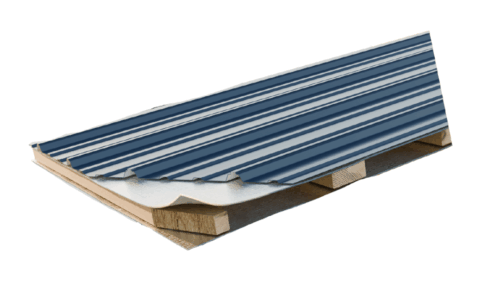
Multi-layer construction (woven polypropylene, foam, and reflective film)
-
Secure fastener hold (“holds staples like crazy”)
These features make them suitable for both residential-style sheds and commercial-scale barns.
5. Long-Term Value
Though the upfront cost is slightly higher than felt, the savings in reduced repairs, energy efficiency, and faster installation more than offset the difference. For builders, that means fewer callbacks; for owners, it means peace of mind.

Applications Where Synthetic Shines
-
Metal buildings: Superior condensation control under steel roofing.
-
Pole barns: Adds insulation while reducing moisture damage.
-
Shops and sheds: Protects stored tools, equipment, and personal items.
-
Residential & commercial metal roofing: Long-lasting protection across multiple building types.
The Next Step: A Smarter Choice in Underlayment
With benefits like moisture control, thermal performance, easy installation, and durability, it’s easy to see why shed and barn builders are moving away from felt paper. Synthetic underlayments are no longer an upgrade — they’re quickly becoming the standard in modern construction.
And when it comes time to choose a product that delivers all these benefits, one name stands out: ThermaGuard. Proudly made in Tennessee and distributed by Capital Forest Products, ThermaGuard is America’s strongest insulating underlayment — built for sheds, barns, pole buildings, and beyond.
